
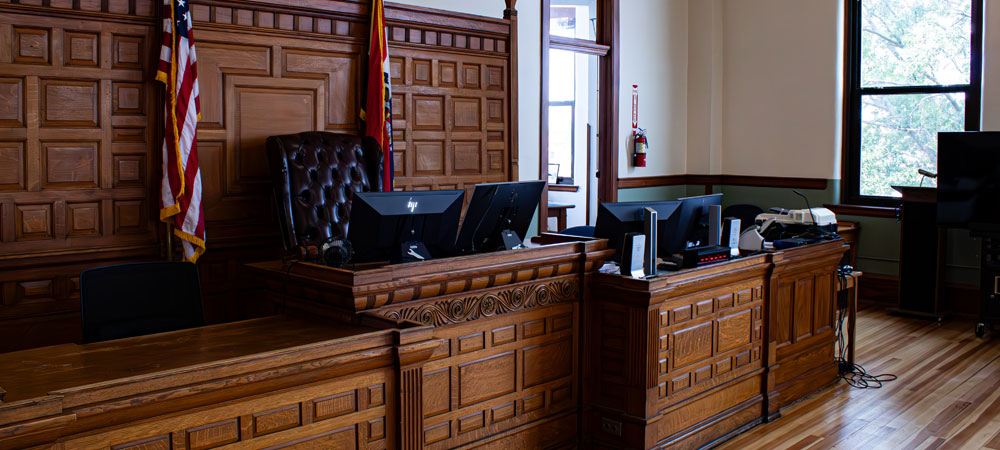
Court reporters play an important role in courtroom trials, hearings, pre-trial depositions, creating official transcripts, and other court proceedings. Professional court reporters can also be found outside the legal profession, transcribing meetings, speeches, providing close captioning services for media broadcasts and more.
Court reporting is a career with both a solid history and forward-looking growth potential — especially for court reporters trained in technologies and techniques for persons who are hearing-impaired. Of course, you cannot simply step into a role as a court reporter.
If you are interested in learning how to be a court reporter, use the following steps as guidelines:
1. Consider your career options. Evaluate your potential career options as a court reporter. Do you think you would enjoy working in a fast-paced legal setting, documenting the legal record for court proceedings? Would you rather work more behind the scenes in a close captioning role, or provide communications access real-time translation (CART) services for the hearing-impaired?
It’s OK not to know exactly what you want to do before starting your training to become a court reporter. However, if you are leaning toward one particular field, you may want to choose a court reporting school that will provide you with the specific training you need.
2. Meet entrance requirements and apply for admission to a court reporting degree program. When you have identified an accredited court reporting degree program that looks like it will meet your needs, interests and schedule, you must meet the college’s entrance examination requirements and apply for admission. Entrance qualification exams typically involve demonstrating that you have a solid grasp of the English language and are able to type with some accuracy and speed.
3. Purchase equipment. In most cases, you will be required to purchase your own stenography equipment and buy or rent a computerized writer machine for certain courses in your court reporting degree program. Your chosen college can tell you more about the equipment you will need to buy or rent.
4. Meet educational requirements. Next, complete your court reporting or stenography degree program at a college or court reporter school. You can earn an Associate in Applied Science degree in Court Reporting in about two years, sometimes less.
In order to graduate, you must demonstrate your mastery of machine shorthand, meeting pre-established minimum skill standards in both speed and accuracy. You will also need to master English spelling, punctuation and grammar.
Consider completing your education to be a court reporter from a college that provides internship opportunities for every student. Internships can be invaluable, providing you with hands-on learning and an opportunity to test the waters in a particular work environment before graduation.
5. Become licensed or certified. If you want to work as a court reporter in a legal setting, you will need to obtain a license after completing your education. Nonetheless, some states accept certain certification programs in lieu of passing a licensure examination.
Some court reporting degree program graduates also choose to pursue advanced certifications, which may make them more attractive to future employers. To earn certifications, you will need to pass a comprehensive examination demonstrating your knowledge and skills.
Common certifications include:
- Registered Professional Reporter (RPR)
- Certified Shorthand Reporter (CSR)
Becoming a court reporter takes time and effort, but putting forth that effort can provide the framework you need for a long, rewarding career. To learn more about Generations College’s Associate of Applied Science degree program in Court Reporting, request information today.